
Use Your Illusions
How I covered my tracks and created the appearance of seamlessness by breaking up my screenprint of a 1956 Topps Ted Williams card into three sections.

The 1956 Topps set has long been a favorite with vintage collectors. Aside from perhaps only the flagship first Topps baseball set in 1952, this collection of 340 cards has few hobby peers when it comes to sheer artistic eye appeal.
Cards from this set also provide me with a great opportunity to illustrate a trick I’ve learned that allows me to create a large scale piece (30”x40”) with no visible seams.
When you look closely at the card, there is an outline of negative space around Ted Williams face that allowed me to do that part independently from the in-action shot and name on the right.
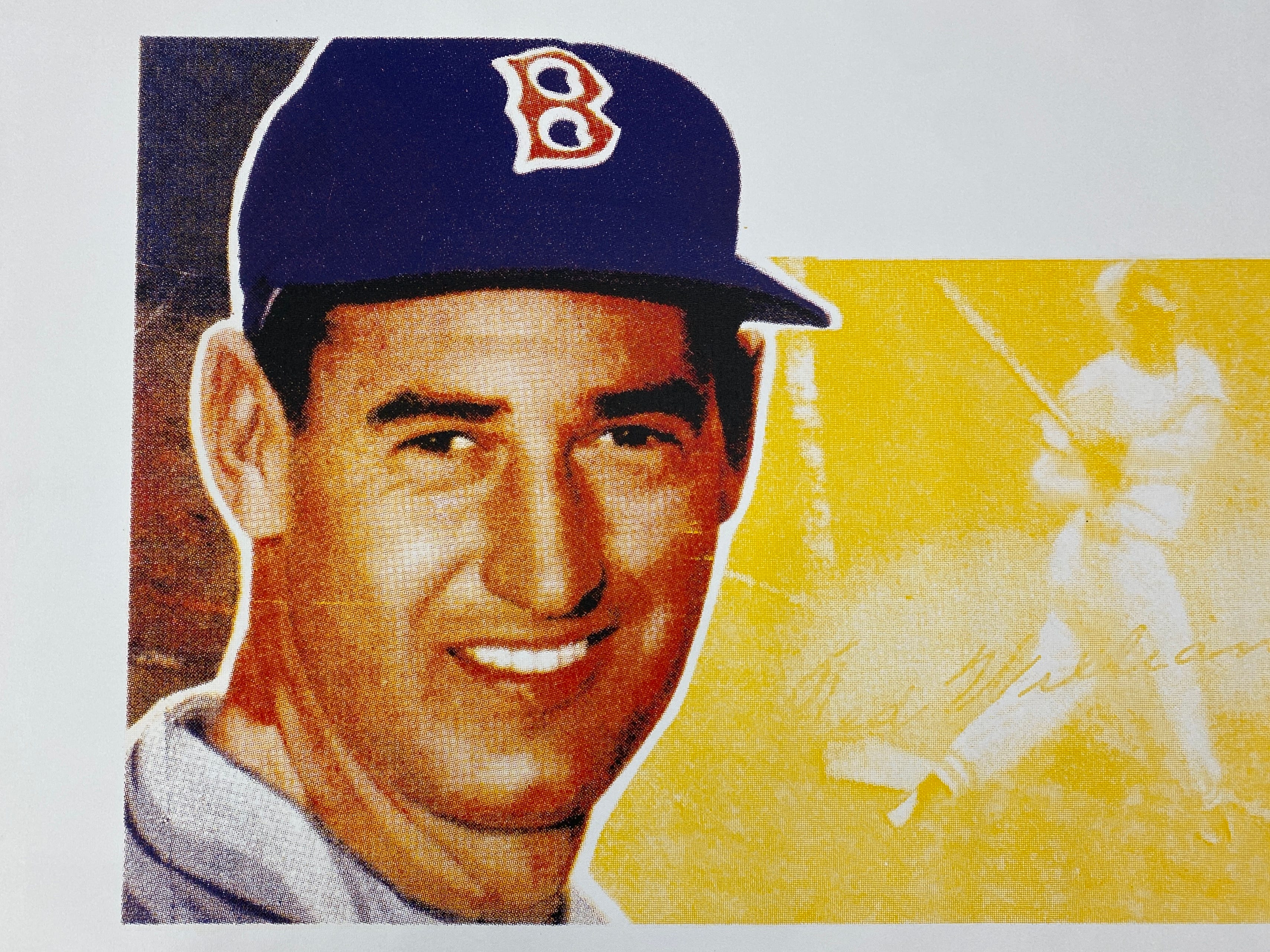
Image of partially completed 30”x40” screenprint.
By allowing me to separate the left and right portion of the card, I am able to bypass one of my biggest current technical limitations, which is that my professional printer is only 24 inches wide. That means any transparencies I would want to be wider than that must be taped together, which it is simply impossible to do on a piece this detailed without it being visible in the final work.
So, armed with this workaround I was able to separate the piece into three sections, all of which appear harmonious and leave absolutely no trace that the piece was done, well, piecemeal!
While doing 3 separate, 4-color CMYK sections took considerably more time, I am absolutely thrilled with the final result. As my father-in-law is fond of saying, fast is slow. This certainly bears that sage nugget of wisdom out: taking the time to go slow and do it correctly the first time ultimately led me to a better end result in less time.
Go slow. Get there faster.
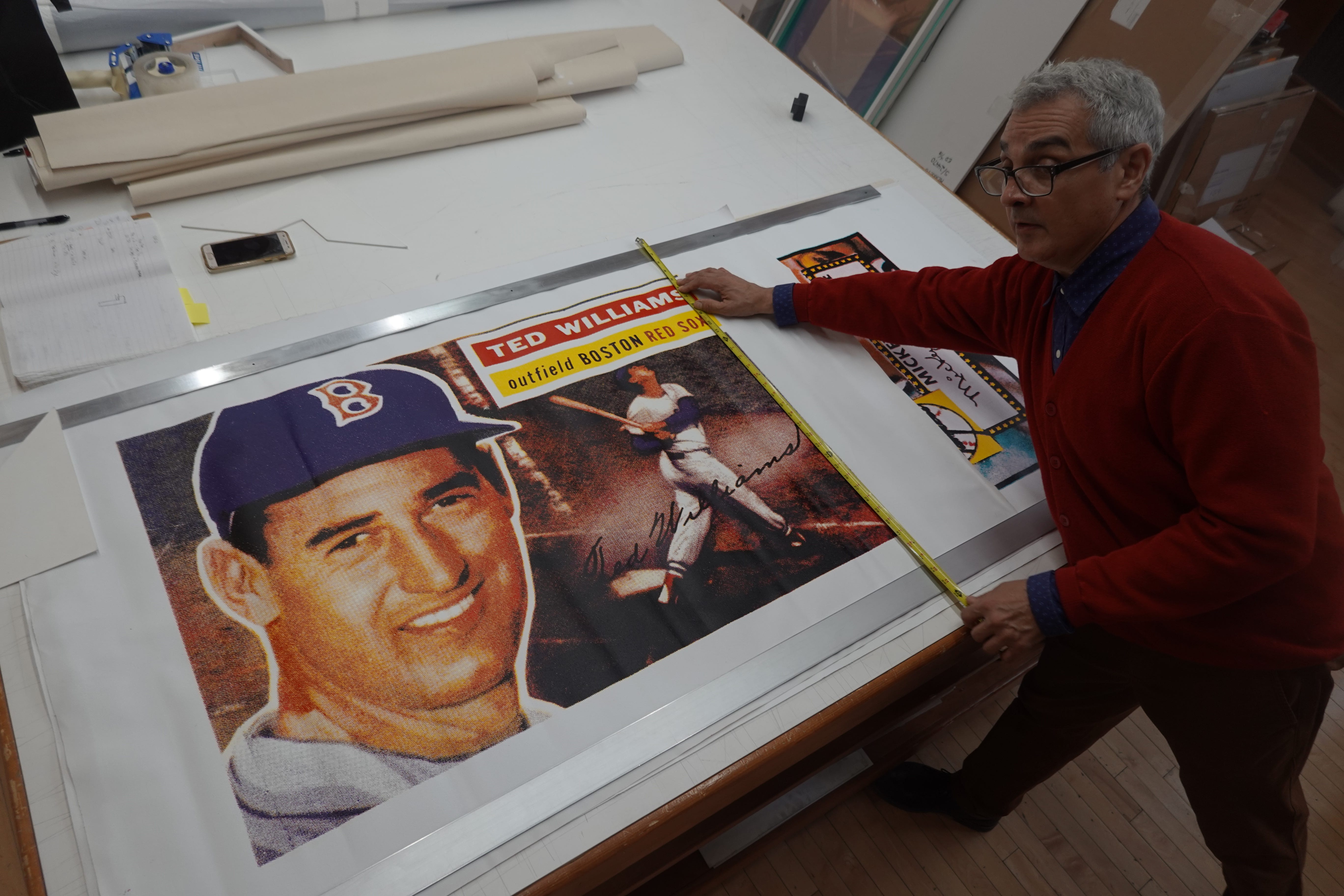
Final piece getting ready to be gallery wrapped onto 1.5 inch stretcher bars at Laumont Photographics in Long Island City, NY.